
Write where you are wrong first, then talk about size
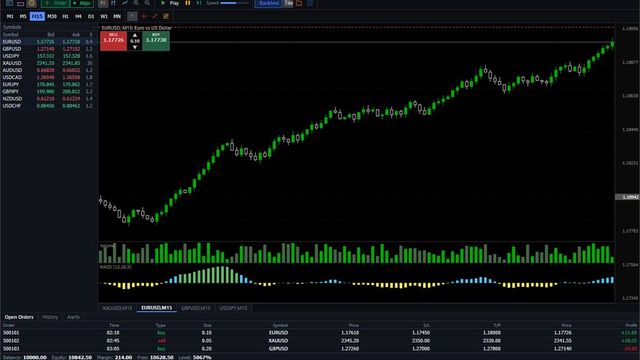
A stop you can name, then a size that fits it. Not a lot you already liked.
This note is one rule: mark a closed-bar fractal swing as the price that proves the idea wrong, then size from the distance to that mark. The swing is an invalidation anchor, not a buy or sell arrow, and not the MetaTrader script that places live orders. Lots come last from a fraction of equity I wrote down in advance. Tools do not make the mark.
Where the extra layer is
I have been trading for more than fifteen years. A line on a chart will not make you money. What a good mark can do is cut one stupid mistake: size that has no relationship to the place you are wrong.
A fractal swing — a clear local high or low on closed bars — is the smallest unit of structure I trust. It is not a holy grail. It gives a concrete invalidation, and that is enough to size from. Bias and higher-timeframe agreement still have to close the loop. This page is only the middle: stop, then size.
This is not the default Williams Fractals arrow. I wait for a closed-bar break of a local extremum, mark the level beyond that swing, then ask what quantity fits a fraction of equity I had already written down. In 2018 I merged six older MetaTrader 4 scripts of mine into one workflow: invalidation outside the fractal structure, then the broker's contract math on that pre-written fraction. The fractal is the anchor, not a directional view.
The gold sitting that broke habit lots
Early on I picked lots by habit. A round forex size, a round gold size — whatever felt about right. That held until a gold stop hit much harder than I had in mind and erased several good days in one move. The setup was not the main problem. I had never tied size to the actual distance to the stop.
If you always trade the same lot, your money at risk changes every trade. A tight stop is a small loss. A wide stop with the same lot can cost several times what you had in your head. Gold and a major forex pair will not produce the same quantity under the same fraction of equity. That is not a table of lots I am handing you.
The order I use now: decide where the trade is wrong; use the fraction of equity I already wrote down — I am not publishing that fraction as your number; compute quantity from those two facts, and do not round up because the stop looks tight. Tick value and contract size differ between a forex pair and gold. A hand-rolled pip formula can be wrong by a wide margin. I found that out on a demo account before it could hurt me live.
Stop first, then size
You cannot size correctly without a defined stop.
A fixed pip stop sits a set distance from entry. Simple to test. It ignores structure. I still use it when I am testing a mechanical distance. I do not pretend it is an invalidation.
A structure stop sits beyond a recent swing high (shorts) or swing low (longs), plus a small buffer. If price takes that level, the idea is invalid. I wait for that level, then size. I do not size, then hunt for a swing that makes the lot look respectable.
Brokers often enforce a minimum stop distance. The stop that lands on the ticket can be wider than the structural level you marked. Quantity has to use the final stop on the ticket. If you size to the tighter structural distance and the ticket is forced wider, you are no longer risking the fraction you wrote down.
When this mark does not count
It is off if you use the fractal as a buy or sell. The swing is where you are wrong, not where you are right. It is off on an unclosed bar. It is off if you move the price after the market has already taken it.
It is off if you compute size from the structural distance and then send a wider ticket stop. The fraction you wrote down applies to the stop that can actually fill. It is off across a gap: a stop on a ticket is a request, not a promise you exit at that price. I do not have a sample that measures how much worse a weekend or a release can be, so I will not invent one.
It is not an edge. Knowing where you are wrong does not make the next bar go your way. I do not chase a loss with larger size, drop the stop because the setup looks obvious, or treat a one-click helper as a system that thinks for me.
How to judge the order
Three checks, before any product pitch.
Can you name the invalidation in price before you name a quantity? If the lot is already in your head, you will drag the stop until the lot fits. That reverses the rule.
Does quantity change when the stop distance changes? Same pre-written fraction, wider stop, smaller size. If the lot stays glued to a habit number, you are back in the gold sitting.
Is the fractal an anchor or an arrow? If taking the swing would not kill the idea, you picked the wrong swing. Pick another, or pass.
The Free desk can rehearse this
Size & stops for training is one sitting on the Free EURUSD H1 sample. Invalidation there is the high and the low of the first H1 bar. That lesson does not talk about lots. This page is the author's own order: write where you are wrong first, then talk about size.
The Free seat has H1 and daily charts. That is enough to mark a closed-bar swing and write the price. You do not need Standard. You do not need a script inside the desk.
If you want the arithmetic on a public page, use the position size calculator. The figures on that form are educational contract numbers. They are not a fraction I am assigning to you.
The Windows build on Download is the practice desk. Pricing is the seat ladder. This rule does not require a paid seat. We ship Windows. Not Mac. Not a browser replay.
On 2026-10-27 the Market listing BarionQuant Fractal Risk Entry One Click Sizing (https://www.mql5.com/en/market/product/182750) (product 182750) places live MetaTrader orders, and the training desk does not include it. This site does not offer that script for download. The longer cut is Same brand name. Two different products.
Who should skip
Skip a paste-ready percent or lot, Williams arrows as entries, a Market script inside Desktop, or a Mac or browser workflow.
FAQ
Is a fractal a signal? No. It is a place the idea dies. Direction still has to come from somewhere else.
Do I need the script to practice the order? No. Write the price. Use a pre-written fraction. Compute size. The Free desk is enough to rehearse the first step. The calculator page is enough to rehearse the arithmetic.
What if the structural stop is so wide that the quantity looks tiny? That is the rule working. Do not round up. If the fraction you wrote down cannot be expressed in a tradable quantity, pass.
Next step
Mark a closed-bar swing on the Free desk and write the price. The first-H1 sitting is Size & stops for training. The arithmetic is the position size calculator. The Windows build is on Download.
For study and simulated practice only. This is not investment advice.
Educational content. BarionQuant is not a broker and does not provide investment advice or trade signals. Past practice results do not predict future outcomes.